Christmas in the Philippines is more than a December celebration. It is a season that begins as early as September, filling shopping centres, neighbourhoods and public spaces with festive decorations, Christmas songs and colourful lights. For expats living in the country, the extended celebrations offer an opportunity to experience Filipino culture, discover local traditions and enjoy the festive atmosphere alongside local communities.
Known for its strong family values and vibrant celebrations, the Philippines embraces Christmas with a combination of religious observances, family gatherings, gift-giving and traditional food. From attending early morning church services to sharing a midnight feast, there are plenty of ways for newcomers to experience the Filipino Christmas spirit.
If this is your first Christmas in the Philippines, understanding the local customs can make the holiday season even more enjoyable. Here is what to know about Christmas traditions, food and fun facts that make the celebration distinctive.
Why Does Christmas in the Philippines Start in September?
One of the most interesting things about Christmas in the Philippines is how early the festive season begins. While many countries wait until December to put up decorations and play Christmas music, Filipinos start celebrating as soon as September arrives.
This is commonly associated with the ‘Ber months’, referring to September, October, November and December. As soon as the first month begins, Christmas songs start playing on radio stations and in shopping centres. Decorations gradually appear in homes, hotels, restaurants and public spaces.
Although September marks the unofficial start of the season, celebrations become more noticeable as December approaches. By then, shopping centres are filled with festive displays, Christmas markets and special events.
For expats, this means there is no shortage of opportunities to enjoy the holiday atmosphere. It is also worth preparing for busier shopping centres, heavier traffic and increased travel demand as Christmas approaches.
Christmas Traditions in the Philippines
Filipino Christmas traditions combine religious practices, family customs and community activities. Some have been passed down through generations, while others have evolved into modern celebrations.
1. Simbang Gabi: Nine Days of Christmas Mass
One of the most recognised religious traditions is Simbang Gabi, a series of nine consecutive Masses held from 16 to 24 December.
The services traditionally take place before sunrise, with some beginning as early as 4 am. They are an important part of the Christmas preparations for many Filipino Catholics, who attend to express their faith and prepare for the celebration of Christ’s birth.
There is also a popular belief that completing all nine Masses will grant a special wish. While this is a cultural belief rather than a formal religious requirement, it remains part of the tradition for many worshippers.
For expats interested in experiencing local religious customs, attending a Simbang Gabi service can offer a closer look at the country’s Catholic heritage. Visitors should remember to dress respectfully and follow the etiquette of the church.
2. Parol: The Traditional Filipino Christmas Lantern
A parol is one of the most recognisable symbols of Christmas in the Philippines. This traditional star-shaped lantern represents the Star of Bethlehem and symbolises hope and light.
Traditionally made using bamboo frames and colourful paper, parols now come in different sizes, materials and designs. Some feature elaborate lighting arrangements, while others retain their handmade appearance.
During the Christmas season, parols can be seen hanging outside homes, along streets and in shopping centres. They are particularly popular in Pampanga, a province known for its lantern-making heritage.
One event worth knowing about is the Giant Lantern Festival in San Fernando, Pampanga. The annual celebration showcases enormous illuminated lanterns created by local communities, with intricate patterns and synchronised lights. It is an interesting cultural experience for expats looking to explore Christmas celebrations beyond Metro Manila.
3. Noche Buena: The Christmas Eve Family Feast
Food plays an important role in Filipino Christmas celebrations, particularly during Noche Buena.
Held on Christmas Eve, Noche Buena is a festive meal shared by families, usually around midnight or after attending Christmas Eve Mass. Relatives gather around the dining table to enjoy traditional dishes, exchange gifts and spend time together.
For many Filipino families, it is one of the most anticipated moments of the Christmas season. The meal can include several dishes, desserts and drinks, with recipes and menus varying between households and regions.
Expats who are invited to a Filipino family’s Noche Buena can expect a welcoming atmosphere and plenty of food. It is also a good opportunity to learn more about local culinary traditions.
4. Christmas Caroling and Gift-Giving
Christmas carolling is another familiar sight during the festive season. Groups of children and young people often visit neighbourhoods, singing Christmas songs outside homes and mall in exchange for small amounts of money. One of the most popular songs, by Jose Mari Chan, the Filipino singer-songwriter best known for his Christmas songs:
Some use homemade musical instruments, including tambourines made from bottle caps. It is a simple activity that reflects the community spirit associated with the holiday.
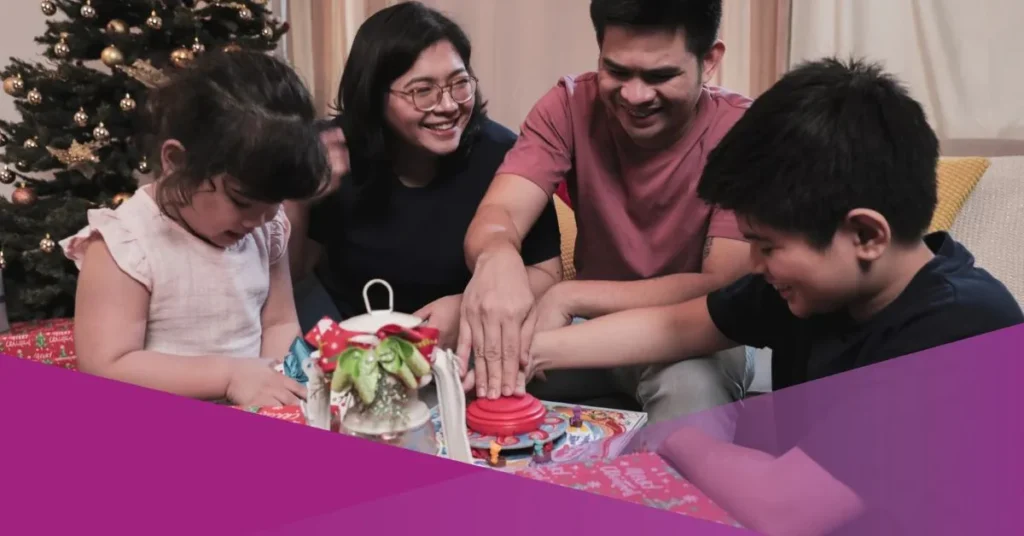
Gift-giving is equally important. Children traditionally visit their godparents, known as ninong and ninang, to receive Christmas presents or money called aguinaldo.
Another popular activity is Monito Monita, the Filipino version of a Secret Santa gift exchange. It is commonly organised in schools, offices and social gatherings, making it a familiar part of the festive season for many workplaces.
Traditional Christmas Food in the Philippines
A Filipino Christmas celebration would not be complete without its festive food. From savoury dishes to sweet rice cakes, the Christmas menu reflects the country’s diverse culinary influences and family traditions.
Here are some dishes expats should look out for during the holiday season.
1. Lechon
Lechon is a whole roasted pig traditionally served during special occasions and celebrations. It is particularly popular at large family gatherings, weddings and Christmas feasts.
The skin is roasted until crispy, while the meat remains tender. It is commonly served with a liver-based dipping sauce, although accompaniments can vary.
2. Christmas Ham and Queso de Bola
Christmas ham, locally known as hamon, is a familiar feature of many Filipino Noche Buena tables. It is often prepared with a sweet glaze and served alongside bread or other festive dishes.
Another popular addition is queso de bola, a round Edam cheese traditionally covered in red wax. Its distinctive appearance makes it easy to recognise, and it is often served with crackers or bread.
3. Bibingka
Bibingka is a traditional Filipino rice cake commonly sold outside churches during the Simbang Gabi season.
It is traditionally made using rice flour and coconut milk, then cooked in a special clay oven lined with banana leaves. Toppings can include salted egg, cheese and grated coconut.
For expats attending an early morning Mass, trying freshly cooked bibingka afterwards is a simple way to experience a local Christmas food tradition.
4. Puto Bumbong
Puto bumbong is another popular seasonal rice cake. It is traditionally prepared using purple glutinous rice steamed in bamboo tubes.
The finished rice cake is usually served with grated coconut, butter or margarine and muscovado sugar. Its purple colour and distinctive preparation make it particularly recognisable during the Christmas season.
5. Filipino Fruit Salad
Filipino fruit salad is a popular dessert at Christmas gatherings. It is commonly made with canned fruit cocktail, cream and condensed milk, although recipes differ between households.
It is usually served chilled, making it a refreshing addition to a table filled with rich and savoury dishes.
6. Tsokolate
Tsokolate is a traditional Filipino hot chocolate drink often enjoyed during the Christmas season. It is made using tablea, locally produced blocks of ground roasted cacao.
The drink is generally thicker and richer than many commercially prepared hot chocolate varieties. It is often enjoyed with bread, rice cakes and other festive snacks.
Fun Facts About Christmas in the Philippines
Beyond the decorations and family feasts, there are several interesting details that make Christmas in the Philippines different from celebrations in other countries.
1. Christmas Celebrations Begin as Early as September
The Philippines is widely recognised for having one of the longest Christmas seasons. The celebrations begin during the Ber months and continue into January, with the festive atmosphere appearing months before Christmas Day.
2. Christmas Music Plays for Months
Christmas songs can be heard in shopping centres, restaurants, radio stations and public spaces from September onwards. Some Filipino Christmas songs have become familiar seasonal favourites, even among people who do not celebrate Christmas locally.
3. Pampanga Is Known as the Christmas Capital of the Philippines
San Fernando in Pampanga is widely known for its lantern-making heritage and Giant Lantern Festival. Its elaborate parols attract visitors who want to see one of the country’s most distinctive Christmas celebrations.
4. Christmas Is a Major Family Reunion
For many Filipinos, Christmas is an important time to reconnect with relatives, including family members who live overseas. Some return to their hometowns specifically for the holiday, making the season particularly busy for domestic travel.
How Expats Can Celebrate Christmas in the Philippines
Experiencing Christmas in the Philippines does not require following every local tradition. However, joining a few activities can help expats understand the culture and connect with the community.
Start by visiting shopping centres and public spaces to see the Christmas decorations and parols. Many establishments organise seasonal displays and entertainment in the weeks leading up to Christmas.
You can also explore local food markets and bakeries to try bibingka, puto bumbong and other seasonal treats. If you have Filipino colleagues or friends, joining a Christmas gathering or Noche Buena celebration can be a meaningful way to experience local hospitality.
For something different, consider travelling to Pampanga to see the Giant Lantern Festival. It offers a chance to experience a regional Christmas tradition and discover another part of the country.
It is also worth planning your December schedule in advance. Christmas is a busy travel period in the Philippines, particularly for people returning to their hometowns. Book flights to Siargao or Boracay. Book an accommodation early if you intend to travel during the holiday season, and check the opening hours of restaurants and shops around Christmas Eve and Christmas Day.
Ultimately, Christmas in the Philippines is about more than festive decorations and seasonal shopping. It is a celebration of family, faith, food and togetherness. For expats, embracing these traditions is a wonderful way to experience the country’s culture and make new memories during the holiday season.
Maligayang Pasko! (Merry Christmas!)