To understand the ghost stories of the Philippines, one must first appreciate the rich cultural history that formed them. Philippine folk beliefs do not exist in isolation. Instead, they are the product of centuries of oral traditions, indigenous animism, and Spanish colonial influence. Long before Spanish ships arrived on the archipelago in the sixteenth century, the native inhabitants held a deep belief in ancestral spirits (ninuno) and nature entities (espiritu). These beings were thought to inhabit trees, earth mounds, and rivers, requiring respect from anyone who traversed their domain.
When Catholicism was introduced across the islands, these original beliefs did not disappear. Rather, they merged with Christian teachings on the afterlife, judgment, and purgatory. This synthesis created a distinct spiritual perspective. In the Philippines, a ghost—commonly known as a multo—is rarely viewed merely as a fictional trope. For many, spirits are regarded as wandering souls (mga ligaw na kaluluwa) that remain attached to the earthly realm due to sudden death, unresolved injustices, or unfinished obligations.
Legendary Creatures of Philippine Ghost Folklore
Beyond traditional apparitions, Philippine mythology features a broad variety of supernatural entities. These figures have been passed down through generations via storytelling and remain central to local folklore.
The Kapre
The kapre is described as a towering, dark-skinned entity that resides in large trees, particularly banyan and mango trees. Often depicted smoking a large pipe or cigar, the kapre is not typically viewed as an outright killer, but rather as a mischievous spirit. It is said to disorient travelers walking through rural areas at night, leading them in circles until they lose their way.
The Kumakatok
The kumakatok consists of three hooded figures: a young woman accompanied by two older men. According to legend, these entities approach residential homes in the middle of the night and knock three times upon the door. Their appearance is viewed as a grim portent, signaling the impending death of a household member. Local tradition dictates that opening the door to these figures invites misfortune.
Dwende and Nuno sa Punso
Lesser spirits tied to nature remain prominent in everyday customs. The dwende are small, house-dwelling or forest-dwelling sprites whose temperaments range from helpful to malicious. Meanwhile, the nuno sa punso is an old man spirit living in subterranean anthills or soil mounds. Uttering the phrase “tabi-tabi po” (“excuse me, please”) when passing these locations is a widespread courtesy intended to prevent minor curses or ailments.
The Manananggal and Aswang
@john.mich88 manananggal part 1 #manananggal #aswang ♬ original sound – John27
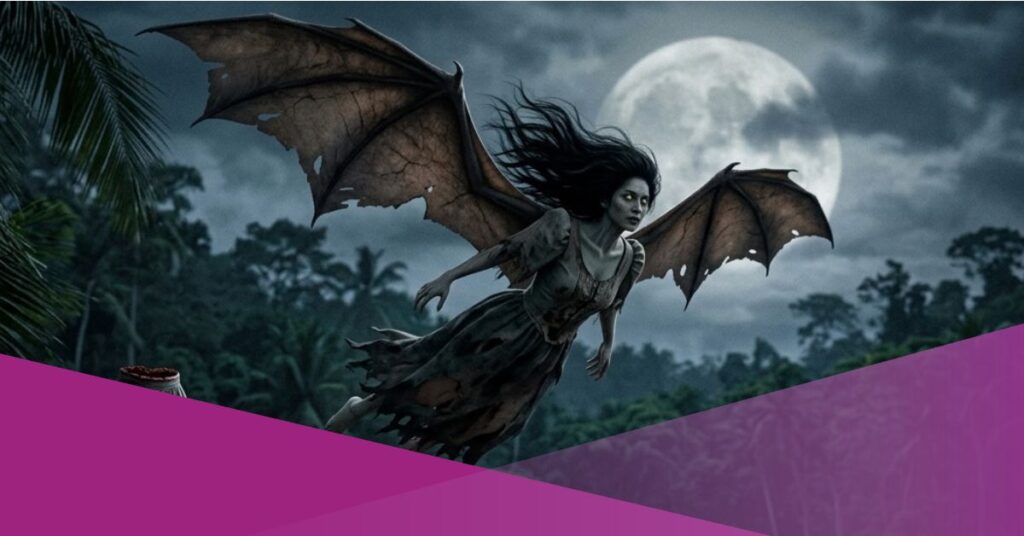
Among the most infamous entities in regional lore is the manananggal. This creature is believed to possess the ability to sever its upper torso from its lower body at night, growing bat-like wings to search for prey. The entity is particularly associated with targeting expectant mothers. To thwart a manananggal, traditional methods involve locating its hidden lower half and sprinkling salt, crushed garlic, or ashes over it, preventing the creature from rejoining before sunrise.
The Most Haunted Places in the Philippines
The country contains numerous locations with reputations for supernatural activity. Many of these sites gained their eerie prestige following historical tragedies, wartime events, or structural disasters.
Balete Drive and the White Lady
Located in Quezon City, Balete Drive is among the most famous haunted stretches of road in the country. Framed by large, shading trees and older residential walls, the avenue is known for sightings of a ghostly female figure clad in white.
Accounts of the White Lady vary; some local traditions attribute her presence to a student who died in a motor accident, while others cite wartime tragedy. Drivers navigating the road late at night frequently report seeing a solitary woman on the roadside or appearing suddenly in their vehicle’s rear-view mirror before vanishing completely.
The Diplomat Hotel, Baguio City
@deexplores From a retreat house to one of Baguio’s most talked-about landmarks, Diplomat Hotel really gives you that eerie but fascinating experience. Perfect for people who love history and spooky vibes. Worth visiting if you are in Baguio City. #diplomathotel #baguio #wheretogoinbaguio #baguiocity #placestovisitinbaguio ♬ Save My Soul – noahrinker
Perched atop Dominican Hill in Baguio City, the structure originally served as a Dominican retreat house and seminary in the early twentieth century. During World War II, the site was occupied by military forces and became the location of severe violence, torture, and loss of life.
It was later renovated and operated as a commercial hotel before eventually falling into disuse. Visitors to the ruined property frequently report heavy atmospheres, disembodied cries, and apparitions resembling headless figures or former residents.
Teacher’s Camp, Baguio City
Established in 1908 as a training facility for American and Filipino educators, Teacher’s Camp possesses a long history tied to the educational development of the region. However, during the Second World War, the grounds were repurposed as a military hospital for wounded soldiers.
Over the decades, guests and staff have reported hearing distinct footsteps dragging heavy chains along hallways, doors opening unexpectedly, and spectral figures walking through the compound during the late hours.
The Laperal White House, Baguio City
Built in the 1930s by a wealthy family, this Victorian-style mansion stands as another prominent site in Baguio City. During wartime occupation, the residence was seized and utilized as a garrison.
Reports from caretakers and neighbors describe unexplainable sounds, doors shutting without human intervention, and the figure of a woman standing near the front windows. Today, the preserved house attracts visitors curious about both its architecture and its haunting history.
Fort Santiago, Intramuros, Manila
As an ancient citadel located in the historic center of Manila, Fort Santiago has stood through centuries of conflict. During the colonial era and World War II, its underground dungeons were used to hold, torture, and execute prisoners of war and political detainees.
The Manila Film Center
Constructed in 1981 to host an international film festival, the Manila Film Center was built under an accelerated schedule. During construction, a major structural collapse occurred, trapping scores of construction workers beneath wet concrete and debris.
Due to strict time constraints, rescue attempts were hasty, leading to persistent rumors that several bodies were left buried within the foundation. Subsequent occupants and visitors have recounted phantom calls for help, unexplainable cold spots, and unusual audio phenomena within the building.
Frequently Asked Questions (PAA)
Why are ghost stories so popular in the Philippines?
Ghost stories are deeply ingrained in the country’s culture due to a combination of pre-colonial animistic traditions and Catholic religious practices. Stories are passed down through families, preserved during annual observances such as Undas (All Saints’ Day and All Souls’ Day), and reinforced through local literature, television programs, and cinema.
What should you say when passing by an anthill or large tree in the Philippines?
It is customary to say “tabi-tabi po” when walking past an anthill, large tree, or unfamiliar area in the countryside. The phrase translates to “please let me pass” or “excuse me,” and it is intended as a polite warning to unseen nature spirits (nuno or dwende) so that they are not accidentally disturbed or stepped on.
Can tourists visit haunted locations in the Philippines?
Yes, many of the country’s well-known historical sites with reputations for haunting are open to the public. Locations like Fort Santiago in Intramuros and the grounds of the Diplomat Hotel in Baguio City operate as heritage sites or public parks, allowing visitors to explore their history and architecture during designated operational hours.