The Philippines is known for its diverse culinary traditions, shaped by centuries of cultural exchange and regional influences. From savoury meat dishes to comforting soups and noodle meals, Filipino cuisine reflects a blend of indigenous cooking methods and flavours introduced through trade and colonial history.
Many Filipino dishes are built around simple ingredients such as rice, vegetables, seafood, pork, and beef. However, what makes Filipino food distinctive is the use of ingredients such as vinegar, soy sauce, garlic, and citrus, which create a balance of salty, sour, and savoury flavours.
Whether you are planning a trip or simply want to learn more about eating in the Philippines, these classic dishes offer an excellent introduction to the country’s culinary heritage.
What Makes Filipino Cuisine Unique?
Filipino cuisine is often characterised by its combination of sweet, sour, salty, and umami flavours. Rice serves as the foundation of most meals, while meats, seafood, and vegetables are prepared using techniques such as braising, grilling, frying, and stewing.
Regional diversity also plays an important role. Different islands and provinces have developed their own specialities based on local ingredients and traditions. As a result, Filipino food varies widely across the country while maintaining a recognisable culinary identity.
Popular Filipino Food You Must Try
1. Adobo: The Philippines’ Most Famous Dish

Among all Filipino dishes, adobo is perhaps the most recognised internationally. The dish predates Spanish colonisation, although the name was later given by Spanish settlers who noticed similarities to their own marinating methods.
Traditional adobo is prepared by simmering meat in a mixture of vinegar, soy sauce, garlic, bay leaves, and black peppercorns. The slow cooking process allows the flavours to develop while helping preserve the meat.
Pork adobo is particularly popular, although chicken adobo is equally common. Some people say, chicken Adobo the unofficial national dish of the Philippines. The result is a rich, savoury meal that pairs perfectly with steamed rice.
2. Balut: The ‘Extreme’ Food
Lihat postingan ini di Instagram
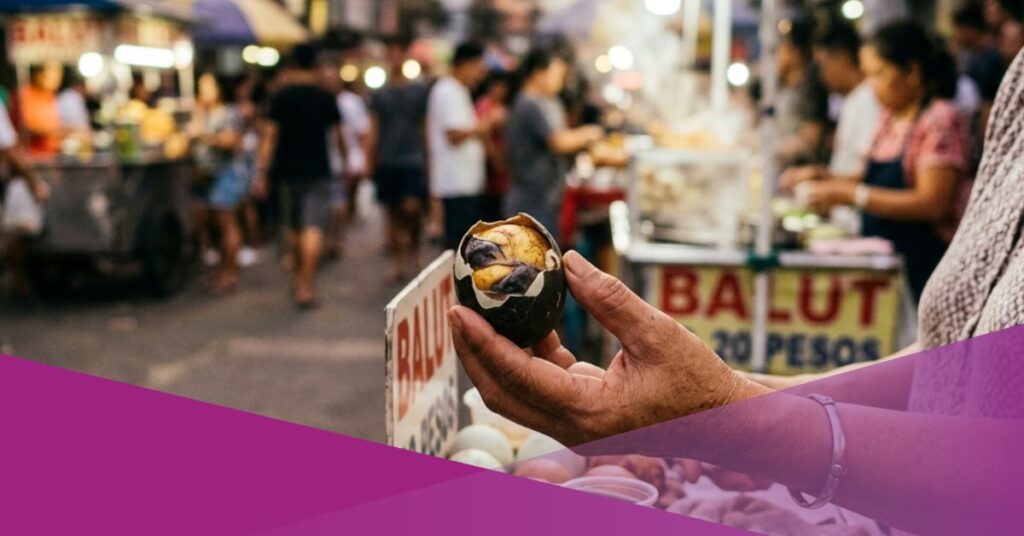
Balut is often cited as one of the world’s most extreme foods. So, what makes it an ‘extreme’ food? This Filipino speciality looks simple on the outside; at first glance, it appears to be just an ordinary boiled egg. However, once the shell is cracked open, the contents often leave people stunned: a fully formed duck embryo.
It’s no wonder that balut frequently goes viral on social media, particularly among lovers of unique and adrenaline-pumping foods. The preparation process is certainly unconventional. Chicken or duck eggs are incubated for 14 to 21 days until the bird embryo has formed, then boiled until cooked and eaten whilst still warm.
3. Sinigang: A Comforting Sour Soup
Sinigang is one of the most beloved comfort foods in the Philippines. Unlike many soups that focus on richness, sinigang is known for its refreshing sourness.
The soup can be prepared with pork, beef, fish, shrimp, or chicken. Its distinctive sour flavour traditionally comes from tamarind, although other fruits such as green mango, guava, or calamansi may also be used.
Vegetables such as water spinach, radish, tomatoes, aubergine, and long beans are commonly added. The result is a hearty dish that balances tangy broth with tender meat and fresh vegetables.
4. Pancit: The Noodle Dish for Celebrations
Pancit refers to a family of noodle dishes that originated from Chinese influence. In Filipino culture, noodles symbolise long life and are frequently served during birthdays and special occasions.
Several variations exist throughout the country, including:
- Pancit Canton, made with wheat noodles
- Pancit Bihon, prepared with thin rice noodles
- Pancit Malabon, known for its seafood toppings
- Pancit Palabok, featuring a rich shrimp-based sauce
Although ingredients vary, most pancit dishes include vegetables, meat, seafood, or a combination of all three.
5. Lumpia: The Filipino Spring Roll

Lumpia is one of the most popular snacks and appetisers in Filipino cuisine. Inspired by Chinese spring rolls, lumpia has become a staple at family gatherings and celebrations.
Fresh lumpia uses soft wrappers filled with vegetables and meat, while fried lumpia features a crispy exterior and savoury filling.
Common fillings include minced pork, beef, chicken, carrots, onions, and green beans. You can enjoy with dipping sauces that range from sweet and sour to garlic vinegar-based blends.
6. Crispy Pata: A Popular Pork Speciality
Crispy pata is a dish made from pork leg that has been boiled until tender before being deep-fried until golden and crisp.
The contrast between the crunchy skin and soft meat is one of the dish’s defining characteristics. Crispy pata is commonly served during celebrations and family gatherings.
Many people enjoy it with a dipping sauce made from vinegar, soy sauce, onions, and chilli, which helps balance the richness of the pork.
7. Kare-Kare: A Rich Peanut-Based Stew
Kare-kare is a thick stew traditionally made with beef, oxtail, or tripe. Its distinctive sauce is created using ground peanuts or peanut butter, giving the dish a rich and creamy texture.
Vegetables such as banana blossoms, string beans, and aubergine are typically included. Kare-kare is often accompanied by bagoong, a fermented shrimp paste that adds a salty contrast to the mild stew.
8. Lechon: The Centrepiece of Filipino Celebrations

Lechon, or whole roasted pig, is often considered the highlight of major celebrations. The pig is slowly roasted over charcoal until the skin becomes crisp and golden.
While lechon is popular throughout the Philippines, different regions have developed their own seasoning methods and flavour profiles. It is commonly served at weddings, festivals, birthdays, and holiday gatherings.
9. Beef Tapa: A Popular Breakfast Favourite
Beef tapa consists of thin slices of cured beef that are marinated before being fried or grilled.
The dish is often served as part of tapsilog, a popular breakfast combination that includes beef tapa, garlic fried rice, and a fried egg. The combination provides a satisfying balance of savoury flavours and textures.
10. Arroz Caldo: A Comforting Rice Porridge
Arroz caldo is a rice porridge commonly enjoyed during cooler weather or when someone is feeling unwell.
The dish is prepared with rice, chicken, garlic, ginger, and broth. Garnishes such as spring onions, boiled eggs, and fried garlic are often added before serving. Its simple ingredients and warming qualities have made arroz caldo a staple comfort food across generations.
11. Sisig: A Sizzling Pork Dish

Originally from Pampanga, sisig has become one of the most recognised Filipino dishes. Traditionally made from chopped pork parts seasoned with citrus and spices, sisig is served on a hot sizzling plate.
Modern versions may include seafood, chicken, or tofu, but pork remains the most common choice.
Why Filipino Food Continues to Gain Global Recognition
As international interest in Southeast Asian cuisine continues to grow, Filipino food has attracted increasing attention around the world. Dishes such as adobo, lumpia, pancit, and sinigang showcase the country’s unique culinary traditions while offering flavours that appeal to a wide range of tastes.
The diversity of Filipino cuisine reflects the country’s history and cultural influences. From hearty pork and beef dishes to comforting soups and noodle specialities, Filipino cooking offers something for every palate.
Exploring Filipino dishes is one of the best ways to understand the culture and traditions of the Philippines. Whether you begin with a bowl of sinigang, a plate of pancit, or a serving of adobo, each dish tells a story about the country’s rich culinary heritage.
For travellers interested in eating in the Philippines, trying these classic Filipino dishes and dessert provides a deeper appreciation of the flavours, ingredients, and traditions that continue to shape Filipino cuisine today.
People Also Ask (PAA)
What is the most famous Filipino dish?
Adobo is widely regarded as the most famous Filipino dish. It is traditionally made by simmering pork or chicken in vinegar, soy sauce, garlic, and spices.
What food should first-time visitors try in the Philippines?
First-time visitors should try adobo, sinigang, pancit, lumpia, lechon, and arroz caldo to experience a range of traditional Filipino flavours.
Photo by gemini.ai