The Philippines demographics is something that expats can learn when they decide to go to this country. It doesn’t matter if you are just visiting or planning a long-term stay; it is worth becoming familiar with the demographic profile of the Philippines.
So without further ado, let’s get to know the Philippines more closely!
The Philippines is strategically located in Southeast Asia, east of Vietnam and north of Indonesia. It has the sixth-largest economy in ASEAN, with a GDP of US$331 billion in 2022.
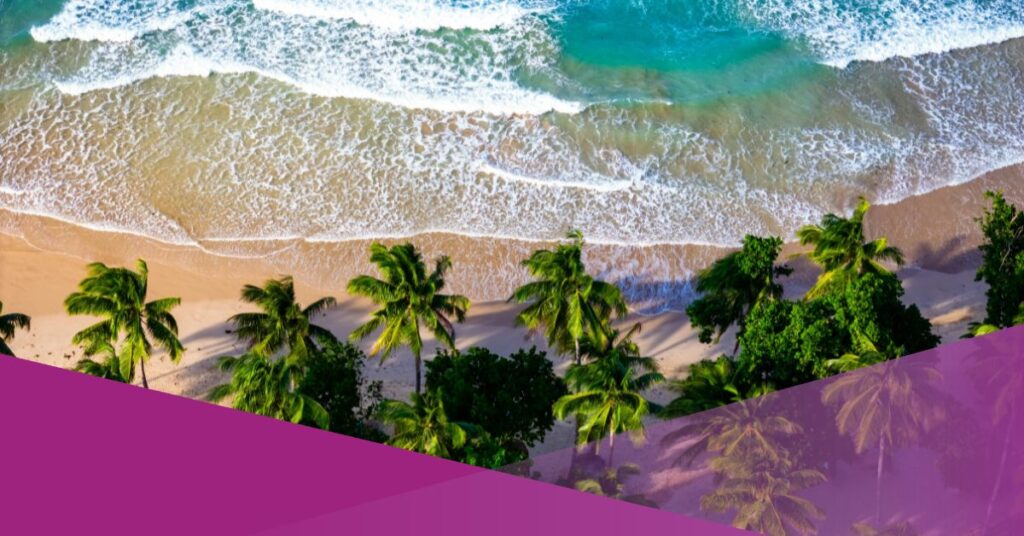
The country boasts extraordinary biodiversity and more than 7,000 islands, many of which offer significant tourism potential. The Philippines is an archipelagic nation in Southeast Asia, located west of Guam and home to major islands such as Panay and Negros.
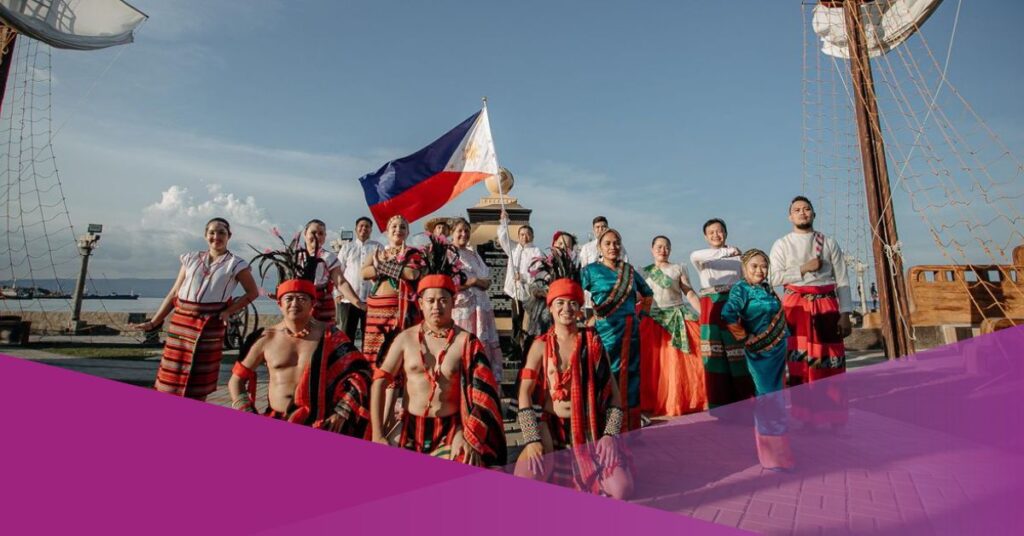
Filipino culture has been influenced by Spanish and American rule, as well as Catholicism, which is reflected in its architecture, music, and traditional dances.
The Philippines stands out not only for its large Christian population but also for being one of the countries with the strongest Christian identities in Asia for centuries.
Demographic data also shows that countries with non-Christian majorities, such as China, India, and Indonesia, still have substantial Christian communities in absolute numbers.
Geographically, demographic trends indicate that the strength of Christianity in Asia is co4ncentrated in East Asia, South Asia, and Southeast Asia, rather than in a single region.
Region
The Philippines is an archipelagic country in Southeast Asia. It is bordered by the South China Sea to the west, the Pacific Ocean to the east, the Celebes Sea to the south, and the Luzon Strait to the north. Comprising more than 7,000 islands, the country is divided into three main island groups: Luzon, Visayas, and Mindanao. The capital city, Manila, is located on Luzon Island.
Ethnicity and Ethnic Groups in the Philippines

With its many island regions, the Philippines is home to a diverse range of ethnic groups. Ethnic identities across the archipelago have developed through a complex historical process.
The largest ethnic group is the Tagalog, accounting for approximately 28% of the total population. Other major groups include the Cebuano, Ilocano, Bisaya, Hiligaynon (Ilonggo), Bikol, and Waray peoples.
Research published in the Journal of Forensic Anthropology, based on contemporary anthropological data, found that among Filipino individuals sampled from the University of the Philippines, 72.7% were phenotypically classified as Asian (East, South, and Southeast Asian), 12.7% as Hispanic (mixed Spanish–Indigenous American and mixed Spanish–Asian), 7.3% as Indigenous American (Native American), 4.5% as African, and 2.7% as European. Safe to say that the majority of the people in the Philippines are related to Austronesian peoples.
Among the country’s indigenous peoples are the Aeta communities, who possess a rich culture and unique local traditions. The Aeta are believed to be descendants of Melanesian populations and are considered among the earliest inhabitants of Luzon before the arrival of later ethnic groups.
Population Density: Total Fertility Rate
The Philippines population is estimated to reach 117,724,471 by mid-2026. This places the country 14th among the world’s most populous nations, accounting for approximately 1.42% of the global population.
According to Worldometer’s analysis of the latest United Nations data, the population of the Philippines stood at 117,321,103 on 26 January 2026.
Yearly Population Growth Rate – The total fertility rate in the Philippines dropped to a record-low 1.7 children per woman, falling well below the 2.1 replacement level needed to naturally maintain population size. This historic decline highlights a broader shift driven by family planning, changing social norms, and increased economic challenges.
Key population facts include:
- The estimated total population in mid-2026 is 117,724,471.
- The population represents approximately 1.42% of the world’s total population.
- The Philippines ranks 14th among countries and dependent territories by population size.
- Population density is 395 people per square kilometre (1,023 people per square mile).
- Total Fertility Rate (TFR): 1.7 children per woman
- Crude Birth Rate: Roughly 16 live births per 1,000 people
- The country’s total land area is 298,170 square kilometres (115,124 square miles).
- Approximately 49.95% of the population lives in urban areas, equivalent to 58,803,262 people in 2026.
- The median age group is 26.6 years.
From this, you can see the Philippines’ population change with time.
Religion
The Philippines is a predominantly Catholic country. Within Asia, it has the largest Catholic population and ranks third globally, after Brazil and Mexico, according to Pew Research Center.
Although Catholicism is now the dominant religion, Islam was historically the first organised religion to spread throughout parts of the archipelago.
Language

One of the country’s key national identities is Filipino, which serves as both the national language and one of the official languages.
Filipino developed from Tagalog and has evolved over time by incorporating vocabulary from various languages, including Spanish and English.
Alongside Filipino, English is also an official language and is widely used in education, business, and government.
Spanish has also had a significant influence on language development in the Philippines, particularly before 1973 when it was more widely spoken. Many commonly used Filipino words originate from Spanish, including mesa (table), zapatos (shoes), and escuela (school).
Education
As an archipelagic nation in Southeast Asia, the Philippines has a rich history and diverse culture shaped by colonisation, globalisation, and socio-economic development. Within this context, the country’s education system has undergone significant transformation.
One important aspect of Filipino culture is the concept of kapwa, which emphasises the value of community and interpersonal relationships. In education, this is reflected in the interactions between teachers and students.
Collaborative and inclusive teaching approaches are often particularly effective because they recognise and value these social connections. By prioritising community and family-oriented values, the learning process becomes more harmonious and supportive of students’ social development.
Occupation in the Philippines

The geography of the Philippines shares many similarities with Indonesia, making agriculture and fisheries important sectors of employment. However, despite the country’s favourable conditions for these industries, the service sector remains the largest source of employment.
In 2020, the service sector accounted for 56.9% of total employment, making it the largest employer in the country. The agricultural sector contributed 24.8% of total employment, while the industrial sector had the smallest share at 18.3% of the workforce.
A good education can significantly improve an individual’s opportunities to secure quality employment.
The Philippines Ranks Second for Happiest Workers in Asia-Pacific
According to the Workplace Happiness Index: Philippines 2025 report by the job platform Jobstreet by SEEK, 77% of Filipino workers reported feeling either “quite happy” or “very happy” at work.
The Philippines ranked second in the Asia-Pacific region, behind Indonesia, which recorded a workplace happiness rate of 82%.
People Also Ask (PAA)
1. What is the total population of the Philippines?
The population of the Philippines in 2026 is estimated to reach 117,724,471.
2. What is the median age in the Philippines?
The current median age of the Philippine population is 26.6 years.
3. What is the largest cities by population in the Philippines?
The city with the largest population in the Philippines is Quezon City, followed by the capital, Manila, and Davao City on the island of Mindanao.
*Source: UN World Population Prospects, United Nations Population Division, United Nations Maternal Mortality, World Urbanization Prospects
Cover: Photo by Denniz Futalan_Pexels